
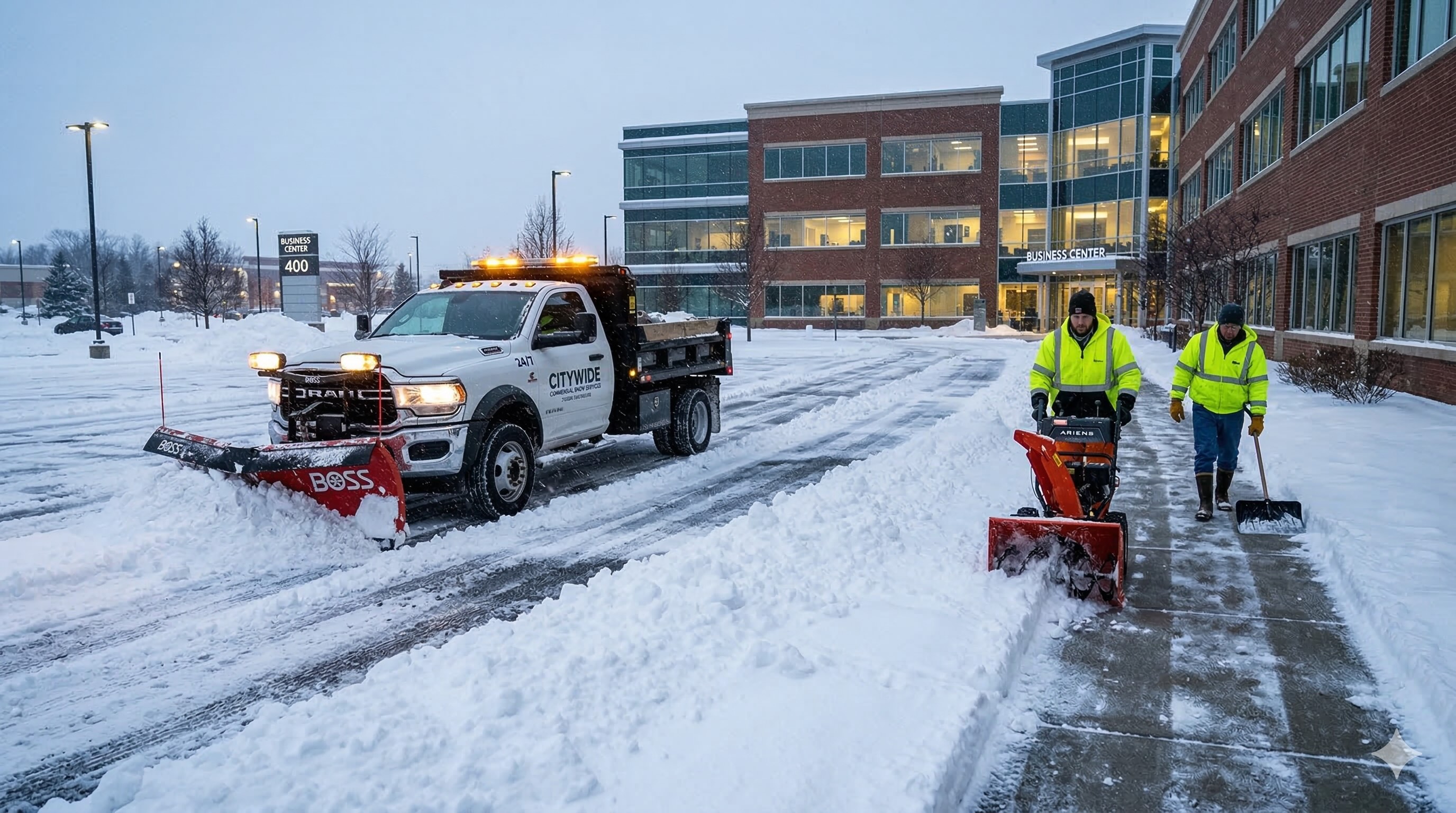
Winter weather can disrupt business operations quickly. For property managers, facility directors, and commercial building owners, planning ahead is critical. One of the most common questions asked before winter arrives is: how much does commercial snow removal cost?
The answer depends on several variables, including property size, snowfall frequency, service scope, and contract structure. Understanding commercial snow removal pricing allows you to budget properly, compare providers confidently, and avoid unexpected winter expenses.
This guide breaks down the average cost for commercial snow removal, explains pricing models, and outlines what influences commercial snow removal rates.
What Factors Influence Commercial Snow Removal Pricing?
No two properties are identical, which means commercial snow removal pricing can vary depending on several factors. Property size, snowfall patterns, service requirements, and equipment needs all play a role in determining the final commercial snow removal cost. Understanding these factors can help property managers and business owners plan their winter maintenance budgets more effectively.
Property Size and Layout
Larger commercial properties naturally require more time, labor, and equipment to clear snow, which increases overall service costs. However, the layout of the property is just as important as its size.
Parking lots with islands, tight corners, multiple entrances, loading zones, and pedestrian walkways often require slower and more detailed snow removal work. These layout complexities increase service time and can influence commercial snow removal rates.
For example, a large open parking lot can often be cleared quickly, while a smaller property with multiple walkways and obstacles may take longer to service.
Snowfall Frequency and Accumulation
Winter weather conditions in your region also influence commercial snow removal pricing. Areas that experience frequent snowstorms or heavy snowfall typically require more service visits throughout the season.
Most snow removal contracts include snowfall trigger levels, such as 2 inches, 4 inches, or 6 inches of accumulation. Once snowfall reaches that level, snow removal crews begin clearing the property.
Higher snowfall totals and more frequent storms increase the number of service visits required, which can affect the average cost for commercial snow removal.
Ice Management and Salting
Snow removal is only part of winter property maintenance. Ice control is equally important for maintaining safe driving and walking conditions.
De-icing services often include salt or ice melt applications to prevent slippery surfaces after snow has been cleared. Salt application may be charged:
- Per application
- Per ton of material used
- Included within a seasonal snow removal contract
Ice control is critical for reducing slip hazards and protecting businesses from liability risks. Because of this, de-icing can represent a noticeable portion of total commercial snow removal pricing.
Sidewalk and Entryway Clearing
Commercial properties must also keep sidewalks, building entrances, and pedestrian pathways clear of snow. Unlike large parking lots that can be cleared with plow trucks, sidewalks often require hand shoveling or snow blowers.
Clearing entrances, steps, and walkways requires additional labor and careful attention, which can add to overall snow removal costs. However, maintaining safe pedestrian access is essential for customer safety and compliance with local regulations.
Equipment Requirements
The equipment needed to service a property can also affect commercial snow removal rates. Smaller properties may only require plow trucks, while larger commercial sites often need skid steers, loaders, or snow pushers to clear snow efficiently.
Using larger equipment can increase hourly costs, but it also allows snow removal crews to clear large parking areas more quickly and effectively.
Liability and Insurance Coverage
Commercial properties carry greater legal responsibility for maintaining safe conditions during winter weather. Slip-and-fall accidents caused by snow or ice can lead to significant liability claims.
Professional commercial snow removal companies carry proper insurance coverage and follow safety procedures to reduce these risks. This coverage and operational responsibility are factored into commercial snow removal pricing, helping protect property owners while ensuring reliable service during winter storms.
Commercial vs Residential Snow Removal Cost Differences
There is often confusion when comparing the snow removal cost commercial and residential services.
Residential snow removal typically includes:
- Driveways
- Small sidewalks
- Limited liability exposure
Commercial snow removal includes:
- Large parking areas
- ADA-compliant access routes
- Continuous monitoring
- Risk documentation
- Higher insurance standards
Because of these operational and liability differences, commercial snow removal pricing is significantly higher than residential rates. However, the scope of service is far more comprehensive.

Why Professional Commercial Snow Removal Is a Smart Investment
When evaluating the average cost of commercial snow removal, it’s important to look beyond the price and consider the financial and legal risks of inadequate service. Snow and ice accumulation on commercial properties is more than an inconvenience—it creates serious safety and liability concerns.
Unmanaged snow and ice can lead to:
- Costly slip-and-fall lawsuits
- Workers’ compensation claims
- Business interruptions and delayed operations
- Reduced customer access and lost revenue
- Tenant dissatisfaction in multi-unit properties
- Local code violations and regulatory penalties
For retail centers, office complexes, medical facilities, and industrial properties, even a few hours of delayed snow removal can impact revenue and reputation. Customers are less likely to visit businesses with unsafe parking lots, and employees may struggle to access the workplace during winter storms.
Professional commercial snow removal providers use the right equipment, trained crews, and proactive monitoring to ensure properties remain safe and accessible. Services often include plowing, sidewalk clearing, salting, de-icing, and ongoing storm monitoring to prevent refreeze hazards.
In addition, reputable contractors maintain proper insurance coverage and detailed service documentation. This record-keeping can be critical in protecting property owners from liability claims.
For property managers and commercial building owners, commercial snow removal is not just a winter maintenance task—it is a strategic investment in risk management, operational continuity, and customer safety. When viewed this way, the cost of professional service often outweighs the potential financial impact of winter-related incidents.
Getting an Accurate Commercial Snow Removal Quote
While industry averages help estimate the average cost for commercial snow removal, they cannot fully reflect the specific needs of your property. Every commercial site has different requirements, which is why the most accurate way to determine your true commercial snow removal cost is through a detailed, site-specific evaluation.
A professional commercial snow removal provider will assess several critical factors before developing pricing, including:
- Total plowable square footage
- Sidewalk and pedestrian walkway footage
- Entry points and high-traffic zones
- Traffic flow patterns within the property
- Snow stacking and relocation areas
- Drainage systems and runoff management
- Ice control requirements and salting frequency
- Desired response times and service priorities
These variables directly influence commercial snow removal pricing and ensure the service plan aligns with your safety, operational, and liability expectations.
A thorough site assessment also allows providers to recommend the right equipment, crew size, and contract structure—whether that means per-push billing or a seasonal snow removal contract for predictable budgeting.
If you are preparing your winter maintenance budget, securing service early offers several advantages. Early planning ensures priority scheduling, reduces last-minute pricing increases, and guarantees that your property is ready before the first major snowfall.
To receive accurate and transparent commercial snow removal rates, visit CrossCut Lawn and Landscape to learn more about our commercial services or request a customized estimate through our Get Estimate page. Planning ahead helps protect your property, control costs, and maintain smooth operations throughout the winter season.


