
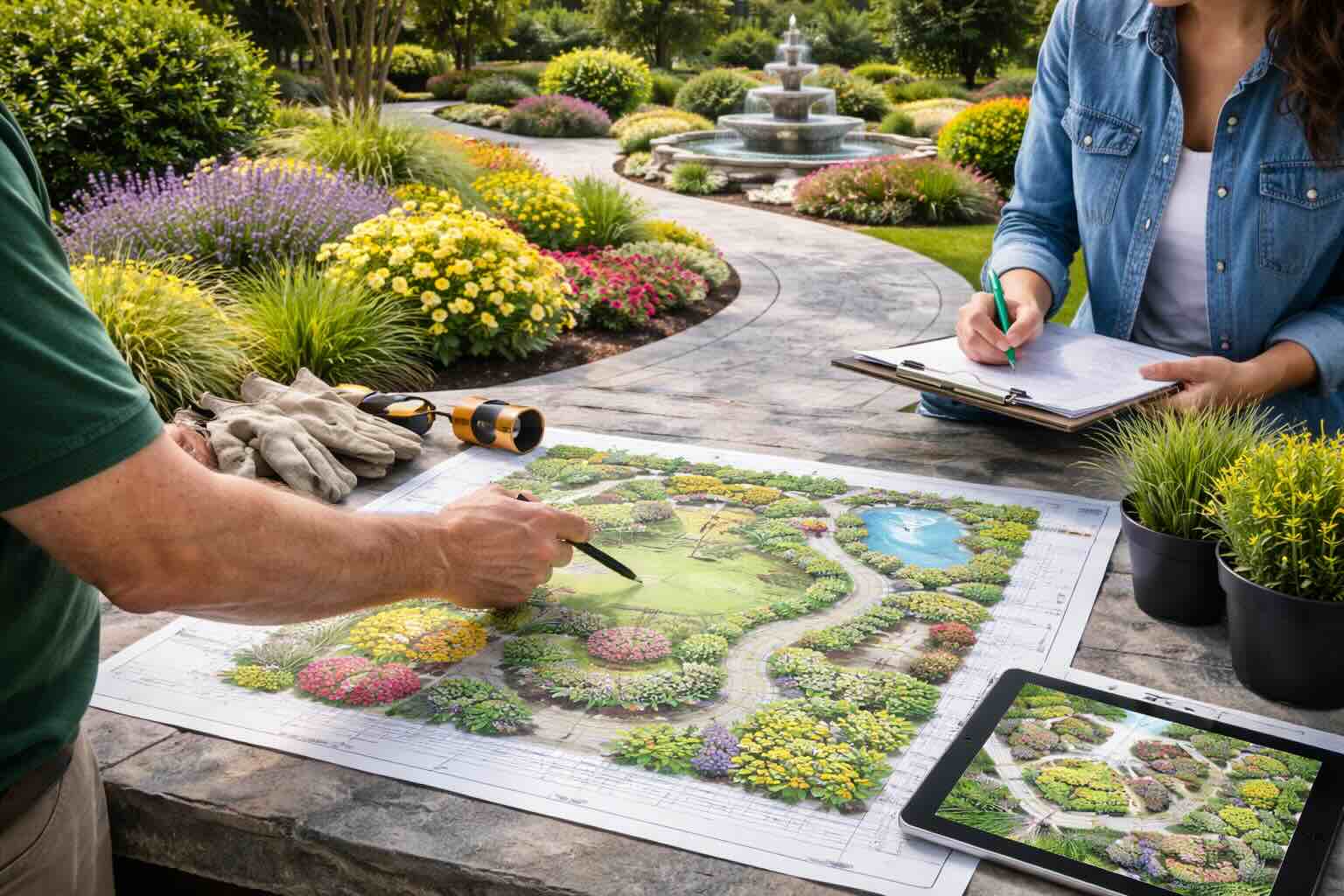
The external appearance of a business is often a reflection of its quality and overall reputation, so understanding the latest commercial landscape design trends can help ensure that your business gives off a confident and professional vibe.
Similarly to fashion, new materials, styles, patterns, and colors are a constant in landscaping. With the right design and concept, you can invest in a significant outdoor remodel that adds value to your commercial establishment and bolsters your business identity as a whole.
Let’s go over the most popular commercial landscape architecture and design trends for 2026 and beyond.
Trend #1: Regenerative Landscapes that Are Climate-Resilient
One of the biggest and perhaps most surprising trends in commercial landscape services is the focus on regenerative landscapes, which are resistant to climate fluctuations.
Regenerative landscapes are not new, but they have become synonymous with utilizing fewer inputs and materials. However, newer regenerative landscape designs actually improve organic matter, enhance soil structure, boost plant health, and have other positive benefits on the environment.
On commercial properties, this translates to layered designs for planting beds and specific trees that help improve soil quality while also having longer canopy longevity.
Trend #2: Biodiversity as a Business Asset
When it comes to biodiversity in commercial landscape planning, most business owners imagine a larger variety of flowers that add an aesthetic touch. However, plant biodiversity in 2026 stretches far beyond appearance and rather focuses on reducing pests, eliminating plant diseases, and providing other practical benefits.
While biodiverse designs do feature a larger assortment of plants and flowers, this trend also brings about the installation of smaller “patches” of vegetable habitat. In other words, you will see different beds that feature flowers, shrubs, and perennials, respectively.
Trend #3: Rain Gardens and Other Stormwater Features
Stormwater is no longer just an engineering concern. It’s becoming a visible, functional design element and a compliance advantage. Rain gardens and bioretention systems capture runoff, filter pollutants through engineered soils, and reduce strain on municipal systems.
If you are thinking of prioritizing smart commercial landscape maintenance, these features blend performance with visual interest while supporting sustainability goals.
Trend #4: Smart Landscaping Automation
Smart landscaping isn’t about flashy tech. It’s about operational efficiency. Advanced systems help commercial landscape installation teams manage multiple properties consistently while reducing waste.
Weather-based irrigation controllers, zone-specific scheduling, and soil moisture sensors ensure water is applied only when needed, improving plant health, lowering utility costs, and simplifying long-term site management.
Trend #5: Low-Water and Low-Mow Design
Low-input landscapes are gaining traction without sacrificing curb appeal. Commercial landscape contractors are replacing high-maintenance turf with planted beds, groundcovers, and defined meadow-style zones.
Slopes, narrow strips, and traffic islands become assets instead of liabilities, reducing irrigation demand and mowing frequency while maintaining a clean, intentional appearance.
Trend #6: Frost-Friendly Hardscapes
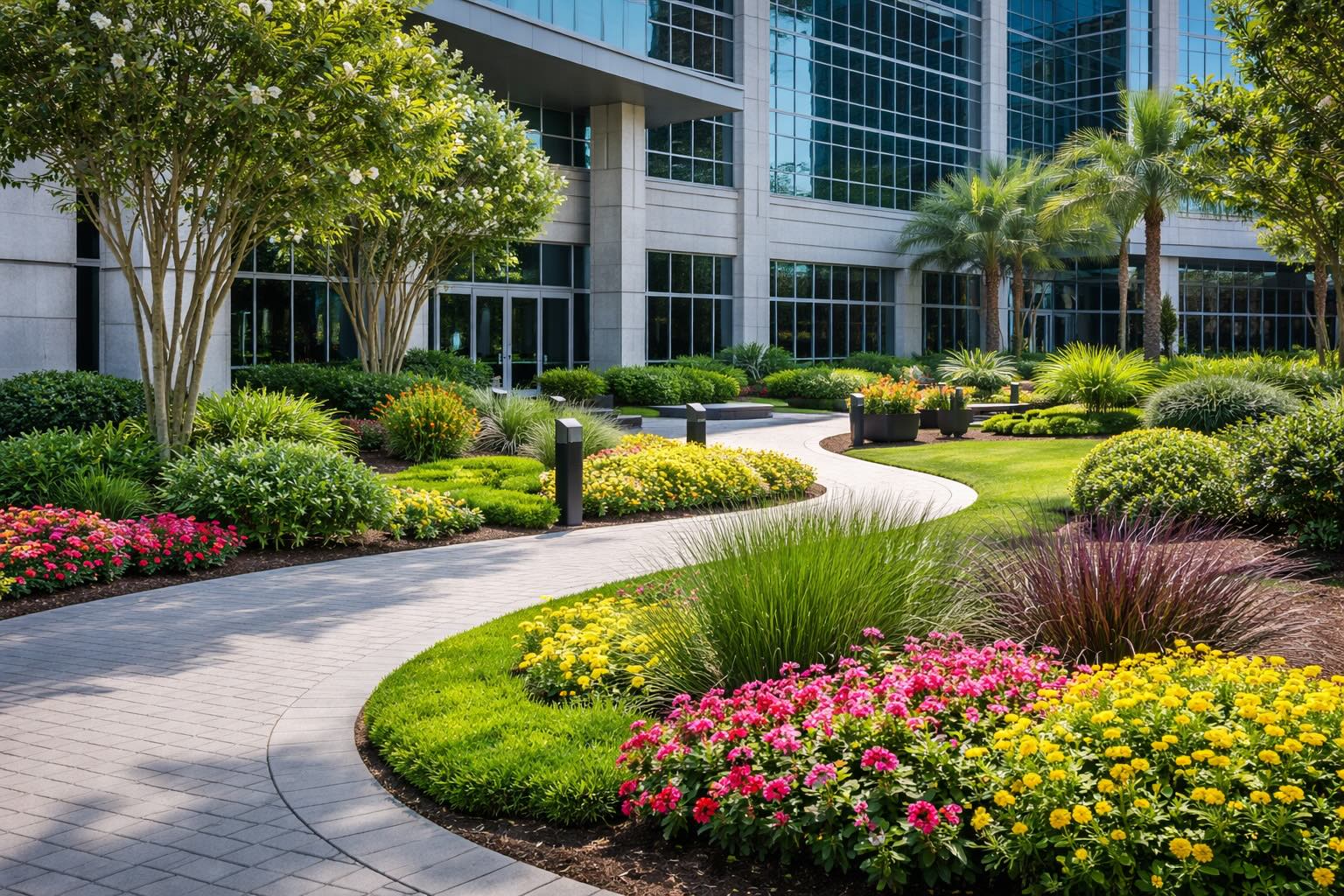
In cold climates, hardscape longevity depends on managing water below the surface. Office landscape design increasingly relies on permeable pavers and open-graded aggregate bases that allow water to drain instead of freezing beneath pavements.
These systems reduce cracking, heaving, and costly repairs, making them ideal for walkways, courtyards, and high-use commercial spaces.
Trend #7: Wellness-Centered Outdoor Spaces
Outdoor areas now influence employee satisfaction, retention, and leasing decisions.
Business landscape design solutions are shifting toward wellness-focused amenities like walking loops, shaded seating clusters, courtyard patios, and outdoor Wi-Fi zones.
Layered planting, natural textures, seasonal color, and subtle water elements support biophilic design principles that improve comfort and daily experience.
Trend #8: Vertical Greening and Roofscapes
If you have a limited amount of space or sustainability goals that you’d like to feature more prominently, then having vertical greening and roofscapes is your next favorite trend.
Vertical gardens and roofscapes are becoming more and more common in corporate landscape design because they can inject life into an otherwise tiresome setting. In addition to improving the aesthetics and general vibe of your business, vertical gardens can also contribute to cleaner indoor air quality and a more vibrant atmosphere.
Often roped in with similar industrial landscape design tendencies, it’s important to note that vertical gardens and roofscapes can also be functional. If you own a food-based business, you can use this space to grow herbs and other ingredients featured in your dishes.
Trend #9: Natural Industrial
Natural industry is one of the latest movements in sustainable commercial landscaping. In short, this design concept focuses on warm minimalism with a touch of industrial durability. This type of commercial outdoor space design utilizes stone and metal as some of its main materials, with wooden accents and tones to adorn the primary elements.
In addition to durable and aesthetically pleasing materials, natural industrial designs feature bold, simple geometry like large planters and boulders. This design style also carries a good amount of texture contrast, so it’s possible to have smooth concrete mixed in with matte metals and wooden features.
What’s Driving These Trends?
As with all tendencies, there’s a set of reasons why certain materials, designs, and styles are trending, so understanding this can also help you make the best long-term choice.
One of the main factors that’s currently influencing commercial garden design trends is the weather patterns. With many expecting more rainfall, hotter stretches in summer, and overall harsher weather, durable materials and functional elements like handrails are gaining more popularity.
Not only this, but liability and safety in your commercial space are paramount to deliver the best level of service to customers and create the right type of environment for your workers. This is the reason why designs that allow for efficient runoff and similar features are trending at the moment.
Lastly, many companies are starting to see their outdoor spaces as an opportunity to showcase their brands as well as the environmental actions they already champion.
Stormwater collection, green canopies, and features that require less input or maintenance fall in this category, and they’re all becoming more commonplace.
Materials and Accessories “Cheat Sheet” for 2026
The stone, pavers, plants, and other classic components of your landscaping have a huge impact, but the accents, supporting materials, and accessories also play a key role. If you ensure that all of these are aligned, your outdoors will have a consistent look and feel.
Here are some of the most common materials and accessories you’ll see in commercial landscape design during the next year.
Lighting
Lighting plays a key role in your business because it’s practical: it helps customers and employees alike go from the parking lot, to the walkway and to your business.
LED lighting is the baseline for businesses, but newer designs are helping companies stand out and create a lasting impression. Besides walkway lighting, it’s also now common to add photocells, timers, and smart controls that help minimize wasted runtime.
Hardscape
Hardscaping has been popular for a long time, and that remains unchanged. However, there are new advancements that are improving their durability, including permeable pavers, designs that allow for water runoff, and open-graded base systems that help mitigate freeze-thaw cycles.
Metals
Using different metal elements in landscape design is one of the top 10 trends of 2026. Metals are in style because they offer thin profiles, strong edges, a modern touch, and of course, durability. Today, we’re seeing things like planter wraps, screen walls, handrails and elegant sign frames, with the most common finishes including patina looks and power-coated designs that can be made to match your branding.
Decking and Other Structures
Decks are a common feature in offices and government buildings, and they will likely become more popular due to the development of thermally modified wood. This new material delivers improvements in both stability and longevity, but it has to be installed by a knowledgeable contractor. Additionally, businesses and public spaces are now being furnished with shade structures that are resistant to the sometimes harsh weather conditions in Missouri.
Site and Soils
Site and soils have always been an essential part of landscaping, but advancements in both are improving and moving the industry in a new direction. Engineered soils, such as mixes designed for bioretention in rain gardens, solve problems that homeowners have been struggling with for decades. Other innovative soils include structural soils made for trees planted in urban areas as well as compost amendments that help improve infiltration and resilience in worn soil.
Get the Most Innovative Commercial Landscape Designs at Crosscut
Trends like regenerative landscapes, biodiverse shrubbery, and low-water designs are taking the commercial landscape industry by storm, and for good reason. While they may require additional planning and slightly increase the initial investment, these new and innovative designs can enhance your brand identity and help you establish authority with your clientele.
One major factor in the success of your innovative landscape design is your contractor. As a general rule of thumb, you want to choose a contractor that understands different terrains, has experience with projects of all sizes, and can work with innovative as well as traditional materials, as this will give you the highest chances of success.
At Crosscut Lawn and Landscape, we’ve handled a wide range of innovative commercial landscaping projects for all types of businesses. Whether it’s B2C or B2B, our designers can create a personalized plan for your space, accentuate the most attractive areas, and implement all of the functional features your business needs. Contact us today and schedule a consultation with a professional designer.


